

Psychiatrist Digital Marketing Case Study: 156 Booked Appointments in 6 Months

Overview:
A psychiatric mental health clinic in Greater Phoenix made a major operational shift: three physical clinics transitioned into a 100% virtual private practice delivering telemedicine psychiatry with no in-person office locations for patients. That move created a new growth problem. The practice still needed strong local search visibility for “psychiatrist” searches across Greater Phoenix, plus clear positioning for “virtual psychiatrist” intent—then a website experience that converts those visitors into booked appointments.
In this psychiatrist SEO and mental health SEO case study (also a full digital marketing case study), we show how coordinated search engine optimization, local SEO, conversion improvements, remarketing, and later paid media produced 156 booked appointments in six months at a $187.04 average cost per lead—below an approximate national average of $280.
The Situation Before We Started
Like many mental health professionals and healthcare professionals, the owner knew a strong online foundation was necessary, but didn’t have the time to build and manage it. The practice had tried other marketing providers and still had a weak presence on search engines.
Here’s what was happening:
- Weak search engine optimization footprint for psychiatry searches across Greater Phoenix
- A generic website with unclear website content, limited clear service descriptions, and weak conversion flow
- No coordinated SEO strategies connecting visibility → trust → booked appointments
- Online lead generation mostly coming from one verified Google Business Profile; the other two profiles were unverified
- Thin online reputation signals despite prior spend (limited visibility, limited trust-building assets)
- A major transition from physical clinics to telemedicine, requiring new messaging and a different approach to local search
Goals:
We aligned the work to what a person searching for a psychiatrist actually does online:
 1. Improve visibility for psychiatrist searches across Greater Phoenix with target local relevance.
 2. Show up for high-intent “virtual psychiatrist” long tail keywords and related seo keywords.
 3. Convert that traffic into booked appointments and measurable client inquiries.
What We Implemented
We approached this as a full digital marketing build—SEO first, conversion next, and paid ads layered in once the foundation was ready.
1) Website Conversion Optimization + Key Pages
Before scaling traffic, we improved the site experience so it could turn website traffic into booked appointments. We focused on:
- Creating and improving key pages and service pages for the practice’s core service and each specific service, including medication management, intake/assessment, and telemedicine appointments
- Strengthening website content with clearer outcomes, expectations, and next steps
- Improving internal links to guide users and to help search engines understand site structure and service priorities
- Enhancing mobile responsiveness and site speed so the site loads quickly and performs well on mobile devices
- Improving CTAs and reducing friction in the booking path
Important note: we avoided keyword stuffing. The goal was clarity and relevance for both patients and search engines.
2) SEO Foundation: Keyword Research + Local SEO
We built the SEO plan around intent, not vanity numbers.
- Keyword research using tools to evaluate search volume, intent, and the best specific keywords to pursue
- Defined target keywords and local keywords for Greater Phoenix and surrounding areas
- Optimized page titles and meta descriptions to better match what people see and click in Google search results
- Set up measurement via Google Analytics and Google Search Console to monitor indexing and SEO performance
This is the core of SEO for mental health: match what people are searching for, build service clarity, and create a technical foundation that earns trust and rankings.
3) Google Business Profile + Local Search Visibility
A fully virtual practice changes what you can do with local profiles. One constraint here was significant: only one profile was verified.
We focused on making the verified profile do more work:
- Improving the business description, services, and relevant categories
- Ensuring the profile supported discovery in local search
- Strengthening trust signals such as Google Maps visibility and review signals
- Aligning the profile with service areas instead of a traditional location
We also supported broader presence through local directories and healthcare platforms where appropriate.
4) Google Remarketing (Site Retargeting)
Most prospective patients don’t book on the first visit. They compare, think, and come back. Google Remarketing allowed us to re-engage prior visitors and improve conversion efficiency.
5) Paid Media Added in Month 4: Google Search Ads + Meta Ads
We started Google Search Ads and Meta Ads in month 4 to scale once the site and messaging were stronger. Paid media acted as acceleration—SEO remained the foundation.
This matters because many practices rely on paid traffic too early before the website can convert. We took the opposite approach: build conversion readiness first, then scale.
Results After Six Months
Comparing the six months after launching this plan to the prior six months:
- 156 booked appointments
- $187.04 average cost per lead (CPL) (below an approximate national average of ~$280)
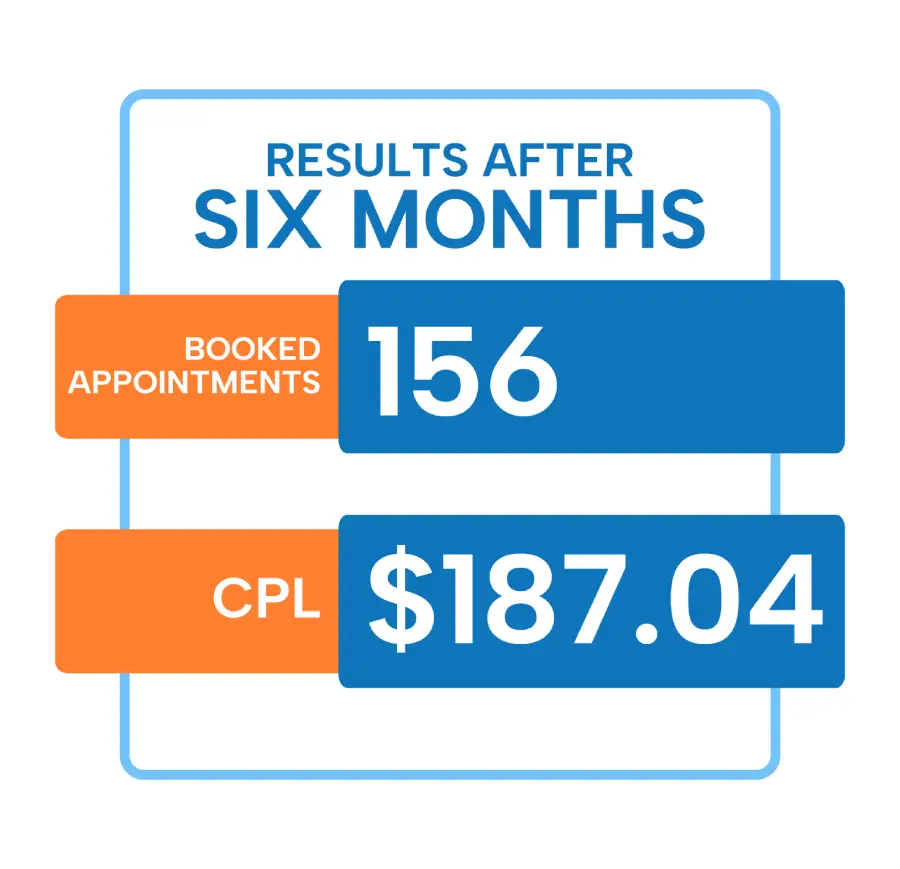
These results reflected a full digital marketing system—not just SEO. The combination of SEO work, improved conversion paths, remarketing, and paid media produced measurable appointment volume at a healthier cost.
Obstacles and Adjustments
This engagement had real constraints, and we built around them:
- Only one verified Google Business Profile: local visibility and call-driven action were concentrated in a single profile early on.
- Weak online presence despite prior spend: the site and messaging were too generic, limiting trust and conversion.
- Major repositioning to virtual: we needed to explain the value of telemedicine clearly and quickly for a person searching, while still matching local intent.
Why the Multi-Channel Digital Marketing Approach Worked
This wasn’t about choosing between SEO and paid ads. It was about sequencing and alignment:
- Search engine optimization improved visibility in organic search results over time.
- Local SEO and the Google Business Profile improved local search visibility where local intent still matters.
- Conversion improvements turned more visitors into bookings.
- Remarketing captured second-visit conversions that are common in healthcare decisions.
- Paid media scaled demand once the system could convert efficiently.
That’s what SEO success looks like in practice: the right SEO strategies, executed consistently, supported by paid campaigns once the foundation is ready.
Complimentary Online Visibility Strategy Session ($247 Value)
30 minutes • 1:1 with a Lead Strategist • Phone call • No pitch. No pressure.

We’ll review your website and Google Business Profile live, evaluate your overall online presence (including local visibility), pull competitor data, discuss keyword opportunities, and identify quick-win improvements—so you know what’s holding back visibility and where the fastest lead gains are.
Book your Strategy Session and walk away with at least 3 clear, actionable improvements.
Want to embed this infographic on your website?