

Medical Clinic SEO Case Study: CPL Dropped 76% While Consult Leads Grew 4.4×

Overview:
A Phoenix-based hormone, longevity, and wellness clinic came to Online Visibility Pros with a strong clinical offering, a clear mission, and one major growth problem: the clinic needed more of the right people to find it online.
The medical practice specialized in services such as bioidentical hormone replacement therapy, hormone optimization, medical weight loss, DEXA scans, and VO2 max fitness testing. The clinic’s ideal patients were health-conscious adults, typically age 40–70, with the income and motivation to invest in cash-pay care that could help them maintain strength, energy, quality of life, and long-term vitality.
That gave the clinic a strong market opportunity. But opportunity does not automatically turn into patient demand.
The Phoenix market is competitive. The clinic was competing against hormone clinics, longevity clinics, testosterone clinics, weight loss clinics, naturopathic providers, and other alternative medicine practices. This was not the same as ranking an orthopedic surgeon, a dentist, or a general family practice. The clinic needed a medical SEO strategy built around its actual services, its target audience, and how patients search for premium, cash-pay care.
This medical clinic SEO case study shows how Online Visibility Pros helped build the digital marketing foundation needed to increase online visibility, improve non-branded organic traffic, and turn more website visitors into consultation requests.
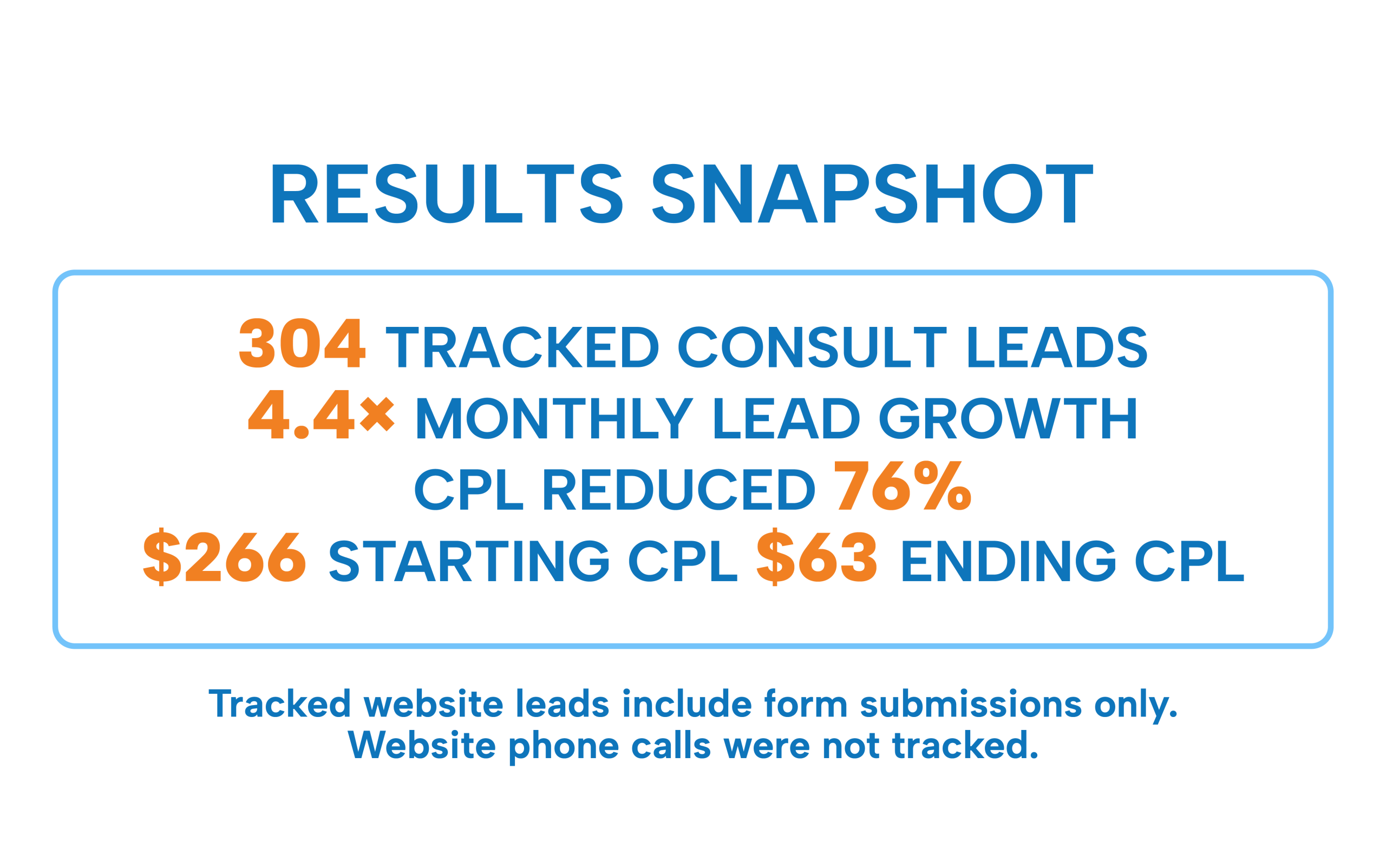
Over 12 months, the campaign generated:
- 304 tracked “Book a Consultation” form leads
- CPL improvement from $266.67 to $63.08
- Monthly consult leads growth from 9 to 40
The most important detail: these results are conservative.
Website phone call leads were not counted because a trackable phone number was not installed on the website during this period. The only website leads included in the total were “Book a Consultation” form submissions.This matters because potential patients often prefer to call a medical practice before filling out a form, especially when evaluating a premium service. So the campaign likely generated more patient inquiries than the numbers show.
The Starting Point
Before working with Online Visibility Pros, the clinic had several pieces in place, but they were not working together as a dependable growth system.
The medical practice had a website, some SEO history, Google Ads activity, local referral sources, and face-to-face networking. But the owner was frustrated that visibility was still the major barrier. In the clinic’s intake answers, one of the biggest obstacles was simple: getting the word out.
That is exactly what strong search engine optimization is supposed to help solve.
The clinic’s best-fit patients were already using search engines. They were researching hormone therapy, BHRT, longevity medicine, weight loss support, and related services. They were comparing healthcare providers, reading patient reviews, checking social proof, and deciding which medical providers looked credible enough to contact.
But the clinic needed to show up more often in the search results and then convert that visibility into consultation requests.
The biggest challenges included:
- Weak non-branded visibility in search engines for high-intent medical service searches
- A healthcare website that needed stronger messaging, clearer service structure, and better conversion paths
- Google Ads that had been producing low ROI relative to spend
- No clear SEO strategy connecting website improvements, local SEO, keyword research, content, reviews, and retargeting
- A competitive local market with many providers chasing similar patient demand
- A premium, cash-pay model that required strong patient trust before someone would book
- No complete tracking for website phone call leads
This was not a “publish a few blog posts and hope” situation.
The clinic needed a stronger healthcare SEO strategy, better local authority, clearer service pages, stronger technical SEO, and a more strategic plan to turn search traffic into consultation requests.
Campaign Goals
The goals were practical and tied to business outcomes.
The clinic did not need vague brand awareness. It needed prospective patients to find the medical practice online, understand the value quickly, and submit a consultation request.
The campaign goals were:
- Improve non-branded visibility for high-intent searches related to hormone therapy, BHRT, longevity care, and related services in Phoenix.
- Increase patient inquiries through the website’s “Book a Consultation” form.
- Reduce cost per lead over time as search engine optimization, local authority, and conversion performance improved.
- Strengthen local search results through the Google Business Profile, local directories, and local relevance signals.
- Build a repeatable digital marketing foundation that did not depend only on paid advertising.
- Increase patient acquisition from organic search results and local discovery.
That last point matters.
Paid ads can help, but if the healthcare website, medical SEO foundation, Google Business Profile, and local authority are weak, paid traffic often becomes expensive traffic. The smarter move was to build a stronger base first, then use retargeting and other channels to support it.
This is where many healthcare providers get burned. They pay for traffic before the website is ready, before the tracking is clean, before the local profile is optimized, and before the message earns trust. That is not a real healthcare SEO strategy. That is buying attention before the foundation can convert.
The Strategy: Digital Marketing Roadmap™
Online Visibility Pros presented a phased Digital Marketing Roadmap™ during the proposal process. The roadmap gave the clinic a clear sequence instead of a random checklist of marketing tasks.
For this type of medical clinic SEO campaign, sequence matters.
You do not start by blindly buying more traffic. You first make sure the website can convert. Then you strengthen the entity foundation. Then you build local SEO momentum. Then you add retargeting and ongoing digital marketing activity to capture more of the demand being created.
Phase 1: Website Foundation
The first phase focused on the website because the healthcare website had to become the central conversion asset.
The work focused on:
- Improving user experience
- Strengthening core website pages
- Filling service page gaps
- Clarifying messaging around the clinic’s most important services
- Improving trust signals and social proof
- Making the “Book a Consultation” path more visible
- Ensuring key information was clear on desktop and mobile devices
- Improving site speed
- Reviewing technical SEO issues, including crawlability, broken links, page structure, and basic on page SEO
- Installing tracking and advertising pixels where appropriate
For a premium medical practice, the website cannot feel generic. Potential patients need to quickly understand what the clinic does, who it helps, why the provider is credible, and what step to take next.
A medical website also has to be handled carefully. It must build trust, avoid exaggerated claims, and protect patient data through proper systems and responsible tracking. That is part of why medical SEO services and healthcare SEO services need a different level of care than standard local business marketing.
Phase 2: Entity Foundation
The second phase focused on strengthening the clinic’s online entity.
That included:
- Google Business Profile optimization by improving the practice’s Google Business Profile categories, services, and business details
- Business listing consistency across online directories and local directories
- Social media profile setup and optimization
- Review generation planning
- Reputation signal improvement
- NAP consistency across local platforms
This matters because Google and other search engines need clear, consistent information about the business, and prospective patients need repeated trust signals before they take action.
For medical practice SEO, the Google Business Profile is not a side asset. It is often one of the first places potential patients interact with the practice. A strong local SEO plan needs the website and the profile working together.
Phase 3: Traffic Generation
The third phase focused on building local SEO and organic visibility momentum.
This included:
- Keyword research and keyword strategy
- Local SEO content strategy
- Service page optimization
- Internal linking improvements
- Supporting content creation
- On page optimization
- Local relevance signals
- Authority-building activities
- Ongoing keyword visibility tracking
- Review of SEO metrics and SEO performance
The goal was not just to rank for broad terms. The goal was to improve visibility for searches that showed intent, location relevance, and service fit.
That is the difference between generic healthcare SEO and a practical medical SEO strategy. You want to rank for searches that attract patients actively seeking care, not just random informational queries.
Phase 4: Retargeting and Ongoing Digital Marketing
The fourth phase included Google Remarketing and ongoing support.
Medical decisions are rarely made in one visit. Prospective patients often research, compare providers, talk with a spouse, check positive reviews, and come back later.
Google Remarketing helped keep the clinic visible to previous website visitors after they left the site. This supported second-visit conversions and improved overall campaign efficiency.
What Online Visibility Pros Implemented
This campaign was not built around one tactic. It worked because several pieces were aligned: search engine optimization, conversion optimization, local SEO, entity building, remarketing, and measurement.
1. Website Conversion Improvements
The website needed to do more than look professional. It needed to help a qualified visitor move from interest to action.
Online Visibility Pros improved the healthcare website experience by strengthening:
- Core page structure
- Service messaging
- Calls-to-action
- Trust elements
- Mobile usability
- Consultation request visibility
- Internal navigation
- Service clarity
- Website optimization fundamentals
- Page speed and UX on mobile devices
The “Book a Consultation” action became the key website conversion point. Since phone calls from the website were not tracked, this form became the primary measurable website lead action.
That distinction matters. The campaign likely produced additional phone inquiries, but this case study only reports what could be measured.
2. Service Page Expansion and Optimization
The clinic offered several services with strong search demand, including hormone optimization, BHRT, medical weight loss, DEXA scans, and VO2 max fitness testing.
Those services needed dedicated or improved pages that explained:
- What the service is
- Who it is for
- Why someone would consider it
- What makes the clinic different
- What step to take next
Service pages are one of the most important assets in a medical clinic SEO campaign. They help potential patients understand the offer, and they help search engines understand what the clinic should be visible for.
Each web page needed a clear purpose. The goal was to connect the clinic’s medical expertise with patient intent. That meant building pages around the way patients search, not just around internal service names.
3. Search Engine Optimization and Technical SEO
The campaign included practical search engine optimization work across the website. This included on page SEO, internal linking, content structure, metadata, and technical SEO improvements.
The technical side matters because search engines need to crawl, understand, and trust the site. If a website has poor site speed, broken links, weak structure, or unresolved technical SEO issues, it can limit search engine rankings, even if the clinic has strong content.
A strong medical SEO campaign does not ignore the technical foundation. It improves the parts of the website that users see and the parts search engines use to evaluate the site.
4. Keyword Research and Content Strategy
The keyword research process focused on identifying the terms most likely to attract local patients and qualified prospects.
This included reviewing:
- Search demand
- Local intent
- Competition
- Treatment and service modifiers
- Phoenix-area queries
- Long-tail terms connected to patient readiness
The goal was not to rank for every possible healthcare term. The goal was to rank for terms that could create more patient inquiries and support patient acquisition.
Content was used to support service visibility, answer patient questions, and improve topical relevance around the clinic’s services. That included improving or adding high quality content around key service categories and using internal linking to connect related pages.
5. Google Business Profile and Local SEO
Because the clinic served patients in and around Phoenix, local visibility mattered.
Online Visibility Pros worked on improving the clinic’s local SEO foundation through:
- Optimize the practice’s Google Business Profile
- Local business listing consistency
- On-page local relevance
- Service-area and Phoenix relevance signals
- Review and reputation planning
- Directory presence across online directories, other online directories, and local directories
The goal was to make the clinic easier to understand, easier to trust, and easier to find in local search results.
A medical clinic is still a local business in the eyes of Google, even when the service category is specialized. That means local searches matter, especially when patients search for service + city terms or “near me” options.
6. Remarketing
Remarketing was used to stay in front of previous website visitors.
For a cash-pay medical practice, this is especially useful because people may need time before booking. They may want to compare options, discuss cost, read more about the provider, or think through whether the service is right for them.
Remarketing helped bring those visitors back and supported the broader SEO strategy by improving the value of the traffic being generated.
Results After 12 Months
The numbers tell the clearest story.
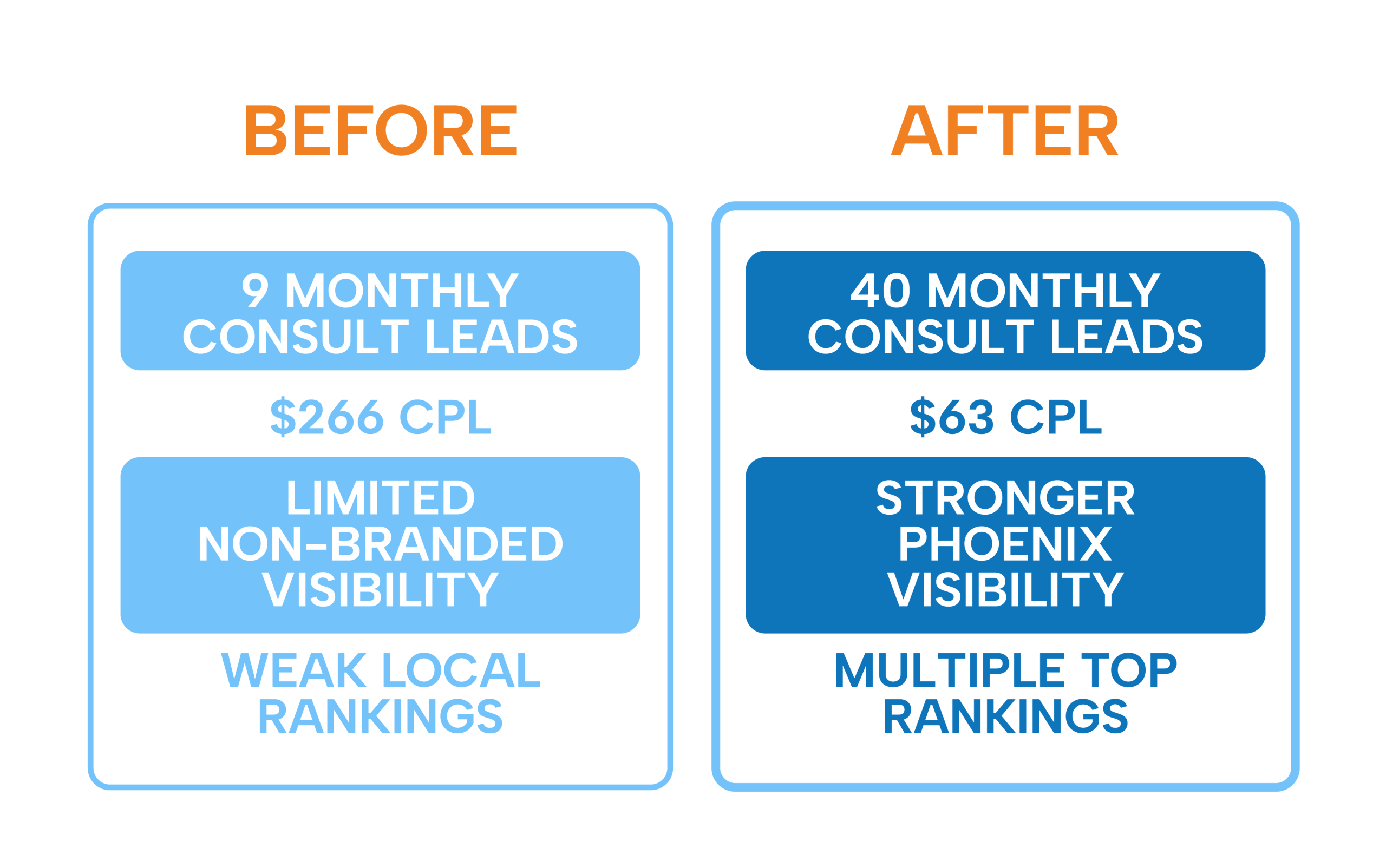
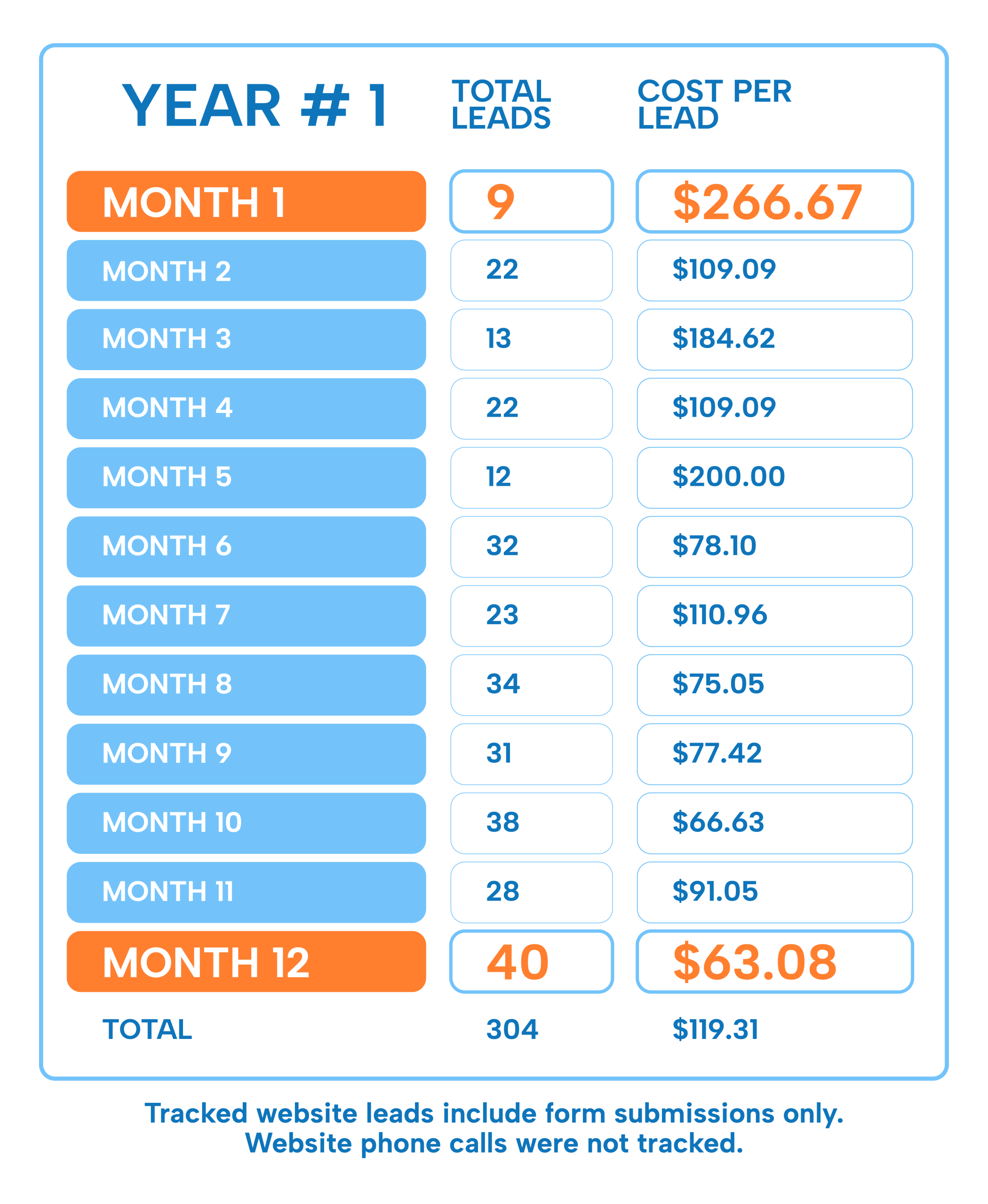
At the beginning of the campaign, performance was expensive and inconsistent. In February, the clinic generated 9 tracked leads at a $266.67 CPL.
By January (12 months later), the clinic generated 40 tracked leads in a month at a $63.08 CPL.
That is not just improvement. That is momentum.
Year 1 Performance Summary
- 304 total tracked leads
- Lead volume grew from 9 to 40 per month
- CPL dropped from $266.67 to $63.08
The two most important performance improvements were:
- Consult leads grew 4.4× from February to January.
- CPL dropped approximately 76% over the same period.
The first months of a campaign are often more expensive because the system is still building traction. As the website improves, the local SEO foundation strengthens, and non-branded visibility expands in search engines, the same marketing effort becomes more efficient.
That is exactly what happened here.
Why the Results Are Conservative
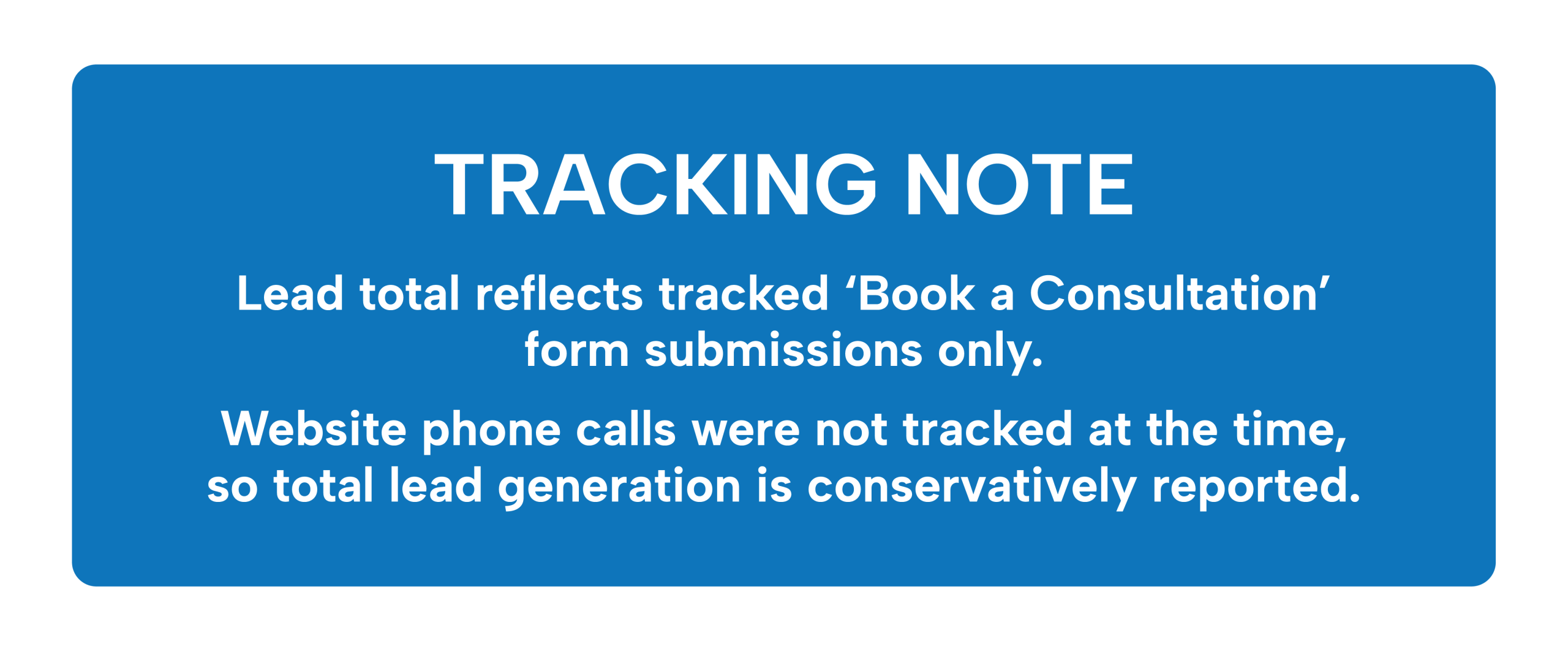
The 304 lead total only includes tracked website form submissions from the “Book a Consultation” form.
Website phone call leads were not included because there was no trackable phone number installed on the website during this campaign period.
That means the reported total does not represent every lead generated from the website. It only represents the measurable form leads. For a medical practice where many potential patients prefer to call, that is an important limitation.
Search Visibility Proof
Lead growth is the final outcome, but search visibility explains how the clinic got there.
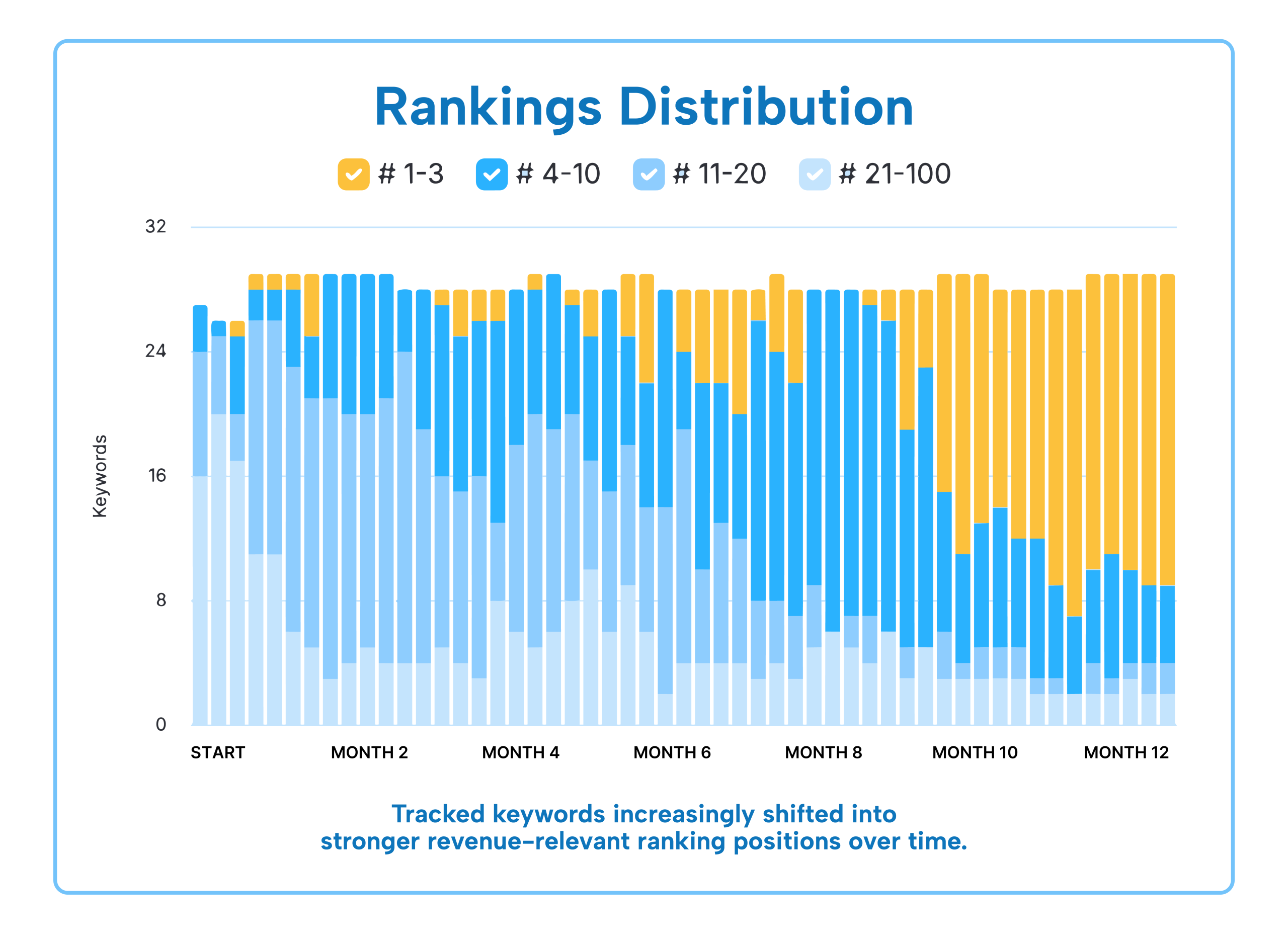
The screenshots attached to this case study show four important layers of proof:
- Overall keyword rankings improved.
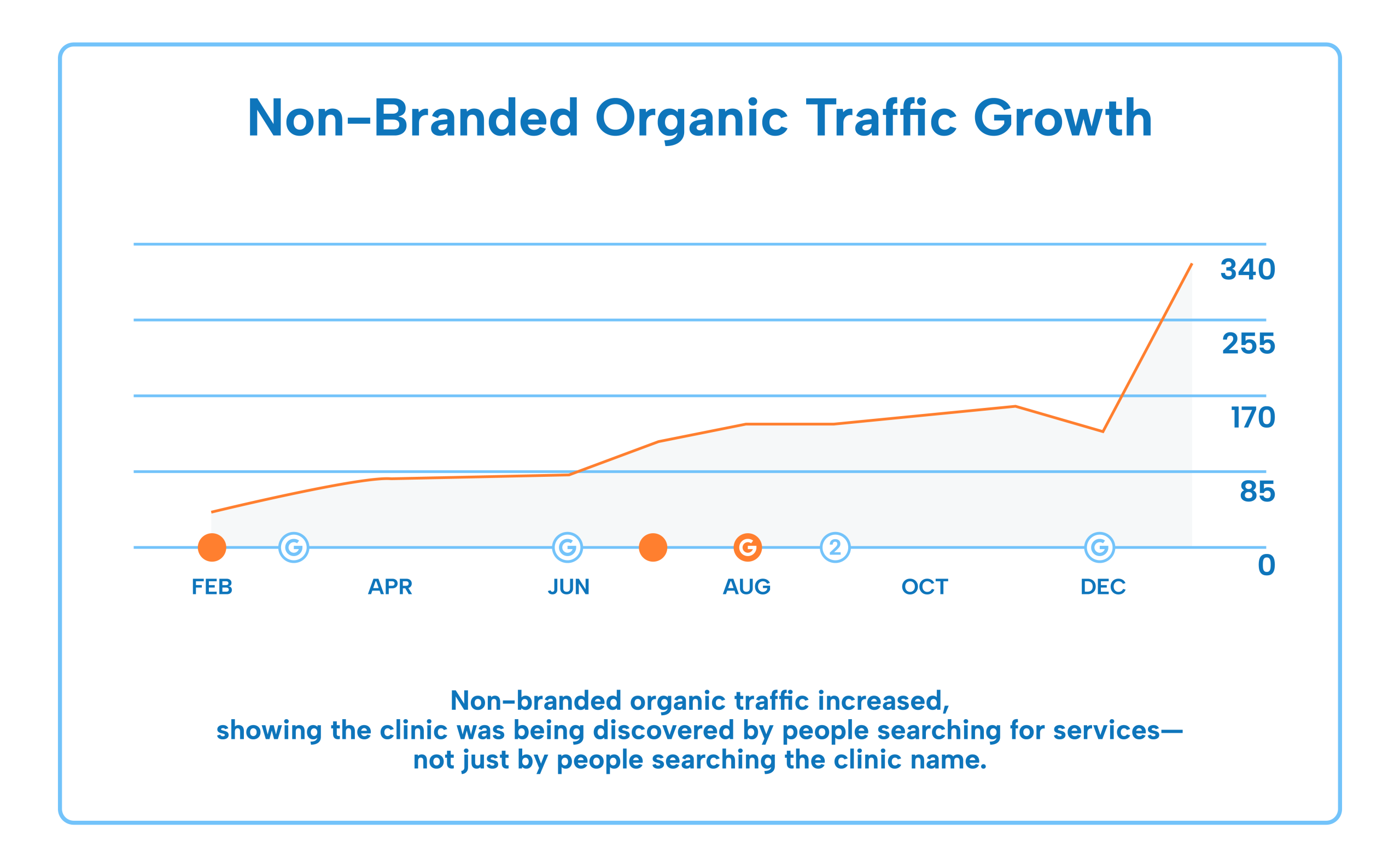
- Non-branded organic traffic increased.
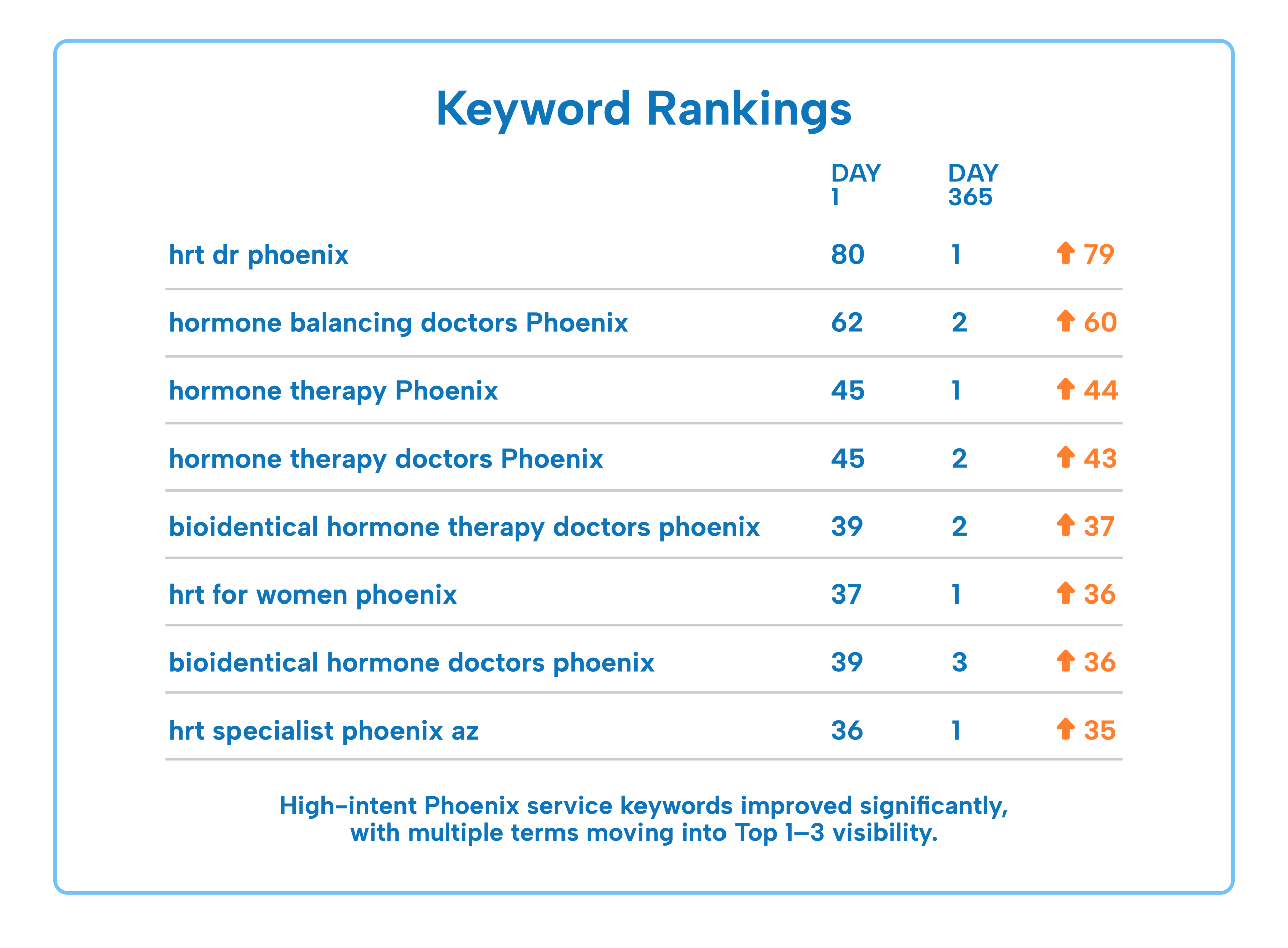
- High-intent local keywords moved into stronger positions.
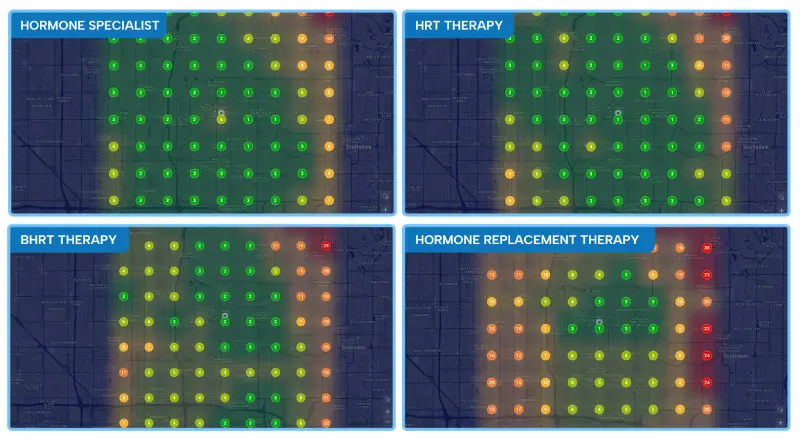
- Local map grid visibility improved for core service searches.
Together, these visuals tell the story of a clinic becoming easier to find online through search engine optimization, medical SEO, and local SEO.
1. Rankings Distribution Improved
The rankings distribution chart shows more keywords moving into valuable visibility ranges over time.
That matters because SEO ranking is not won with one keyword. Strong medical clinic SEO creates a broader footprint across many searches that prospective patients use during the research process.
Some people search broad terms. Others search specific treatments. Others search “near me” or city-modified phrases. A strong SEO strategy builds visibility across that range.
2. Non-Branded Organic Traffic Increased
Non-branded traffic is one of the strongest signs that search engine optimization is doing its job.
Branded traffic means people already know the clinic’s name. Non-branded traffic means the clinic is being discovered by people searching for services, symptoms, solutions, or provider types.
For this campaign, non-branded visibility was critical because the clinic needed to reach new patients who did not already know the brand.
The non-branded organic traffic chart shows growth over the 12-month period, with a clear lift toward the end of the year.
3. High-Intent Keywords Moved Up
The keyword rankings screenshot shows major movement for high-intent Phoenix service terms.
Examples include:
- “bioidentical hormone replacement phoenix” moving to position 1
- “bioidentical hormone treatment phoenix” moving to position 1
- “hormone replacement phoenix az” moving to position 1
- “hormone replacement therapy for women phoenix” moving to position 1
- “hormone therapy phoenix” moving to position 1
- “hrt clinic phoenix” moving to position 1
- “hormone specialist phoenix az” moving to position 2
- “hormone therapy doctors phoenix” moving to position 2
- “bioidentical doctors phoenix” moving to position 3
This is strong proof because these are not random informational keywords. These are service-driven terms connected to patient intent.
Ranking improvements like these help explain why lead volume increased and CPL improved. Stronger search rankings and better presence in search results helped create more qualified discovery from Google search and other search engines.
4. Local Map Grid Visibility Improved
Local rank grids are especially persuasive for medical practice SEO because they show visibility across the city, not just from one location.
The attached grid screenshots show local ranking performance for core service queries, including:
- BHRT therapy
- Hormone specialist
- HRT therapy
- Hormone replacement therapy
These visuals show the clinic was not just ranking from one isolated point. It was gaining visibility across a meaningful local area.
This matters for a Phoenix clinic because local patients may come from different nearby neighborhoods, especially when the service is specialized and premium.
What Made the Campaign Work
This campaign worked because the SEO strategy was built in the right order.
1. The Website Was Treated as the Conversion Engine
Many clinics want more traffic, but ignore conversion. That is backwards.
If the website does not explain the offer clearly, build patient trust quickly, and make the next step obvious, more traffic just creates more missed opportunities.
Online Visibility Pros focused on improving the clinic’s website structure, service pages, trust messaging, technical SEO, and consultation request path before relying on traffic volume alone.
2. SEO Focused on Non-Branded Demand
The goal was not to get more people searching the clinic name.
The goal was to reach people searching for services before they had decided who to contact.
That is where non-branded search matters. When a clinic earns visibility for high-intent non-branded terms, it creates new demand instead of only capturing people who already know the brand.
3. Local SEO Strengthened Discovery
Medical decisions often have local intent, even when the service is specialized. People want a provider they can trust, and geography still plays a role.
The local SEO work helped connect the clinic to Phoenix-area searches and improved visibility across both traditional organic search results and local map-style discovery.
4. Remarketing Supported the Longer Decision Cycle
Cash-pay medical services often involve more consideration.
Prospects may not fill out a consultation form on the first visit. They may return days or weeks later. Remarketing helped keep the clinic visible during that decision window.
5. Consistency Created Momentum
The biggest trap in search engine optimization is treating it like a switch.
You do not turn SEO on and off and expect compounding returns. The campaign improved because the foundation, content, local signals, technical SEO, and conversion paths were worked on consistently over time.
That is why the end-of-year numbers looked dramatically better than the starting point.
Client Feedback
The client described the Online Visibility Pros team as:
“Very knowledgeable, personable, and great to work with. I highly recommend!”
Key Takeaways for Medical Clinics
This medical practice SEO case study has lessons that apply beyond hormone therapy or longevity medicine.
If you run a medical clinic and want more patients from search engines, the path is not complicated—but it does require discipline.
Start With the Website
Before scaling traffic, make sure your website can convert.
Your service pages need to explain what you offer, who it is for, why your provider is qualified, and what step the visitor should take next.
A strong healthcare website should be fast, clear, mobile-friendly, and built to protect patient data.
Build Around Search Intent
Do not chase keywords just because they have volume.
The best medical SEO targets searches connected to real patient intent. That means service terms, local terms, treatment-related phrases, and long-tail searches that show someone is actively comparing options.
Strengthen the Google Business Profile
Your Google Business Profile is one of the most important trust and discovery assets for a local business in the healthcare industry.
It should be accurate, complete, active, and aligned with your website. The practice’s Google Business Profile should support the same services, categories, and positioning as the site.
Track What Matters
Rankings are useful, but leads matter more.
For this campaign, the main tracked conversion was the “Book a Consultation” form. Future tracking should also include dynamic phone call tracking so website call leads are properly counted.
Tracking through Google Analytics and Google Search Console helps evaluate seo performance, search traffic, and which pages are creating patient demand.
Use Remarketing to Stay Visible
Many patients do not convert on the first visit.
Remarketing helps bring interested visitors back after they have had more time to think, compare, and decide.
Final Results Summary
In 12 months, the campaign helped a Phoenix medical clinic move from limited visibility and expensive early lead generation to a stronger, more efficient growth system.
The final tracked results:
- 304 tracked “Book a Consultation” form leads
- CPL reduced from $266.67 to $63.08
- Monthly leads increased from 9 to 40
- Non-branded organic visibility improved
- High-intent keywords moved into top rankings
- Local map visibility strengthened across Phoenix
Again, website phone call leads were not tracked, so the results are conservative.
This is what strong medical SEO services and healthcare SEO services should do: improve visibility, build trust, increase qualified inquiries, and reduce the cost of lead generation as the foundation gets stronger.
Complimentary Online Visibility Strategy Session ($497 Value)
30 minutes • 1:1 with a Lead Strategist • Phone call • No pitch. No pressure.
We’ll review your website and Google Business Profile live, evaluate your overall online visibility, pull competitor data, discuss keyword opportunities, and identify quick-win improvements—so you know what’s holding back visibility and where the fastest lead gains are.
Book your Strategy Session and walk away with at least 3 clear, actionable improvements.
Want to embed this infographic on your website?